
Charging PHEVs/EVs in Japan
I drive a Honda Clarity PHEV, which runs on electricity for most of my short trips on ordinary roads. That means it needs to be charged regularly. I usually charge at home, but I sometimes use public chargers located in many places around Japan.
In Japan, there are two main charging standards. Almost all fast chargers use the CHAdeMO standard, although the output varies by charger. Recently, ultra-fast chargers of around 90kW have appeared in some locations. Tesla Superchargers are also available in Japan, but they are far less common than CHAdeMO chargers. Most slow chargers use 200V and typically deliver about 6kW.

Fast chargers are installed at most expressway service areas. You can also find them at Nissan and Mitsubishi dealerships (and increasingly at other manufacturers), public facilities, shopping malls such as AEON, and some convenience stores. Slow chargers are less common, but they are often installed where people park for several hours, such as shopping malls and public buildings. Their locations can be checked on websites like EVSmart and GoGoEV. There are, also, very few FREE fast chargers offered by municipality governments.
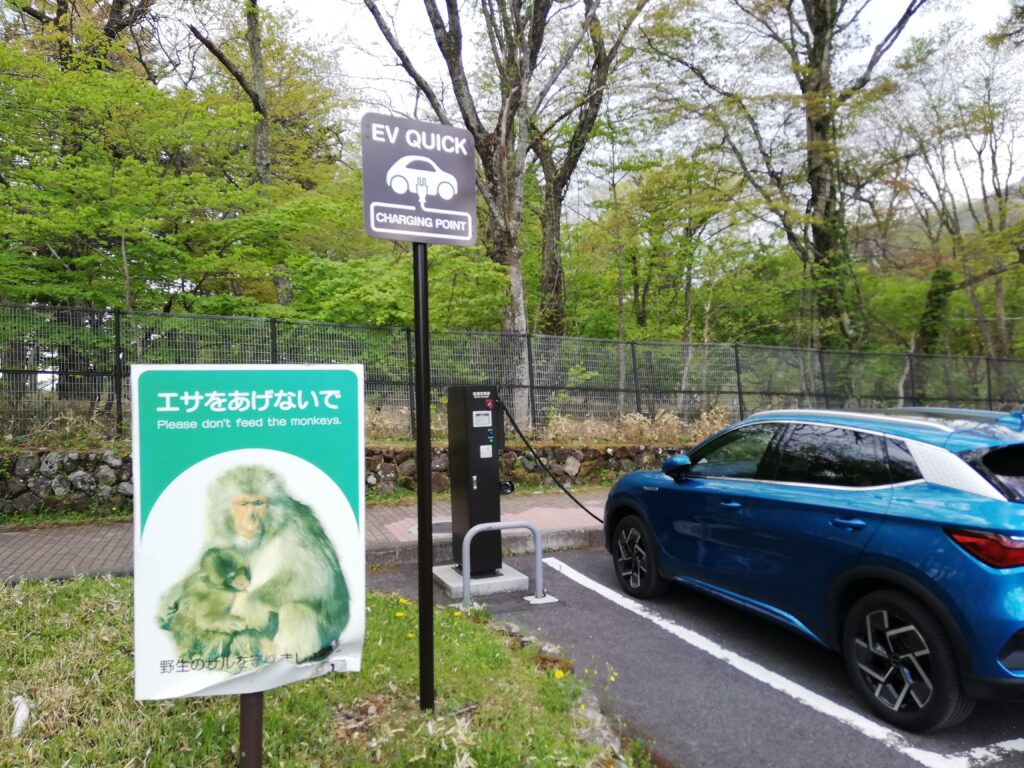
Although these chargers are operated by many different entities, their payment methods are somewhat standardized. Most belong to the eMP network and use a chip card for authentication and payment. To use them, you need an eMP-compatible card, which you obtain by subscribing to one of several services offered by different automakers, something that is quite confusing for users. Each automaker (such as Nissan) offers its own card to EV buyers through dealers, and you can also obtain a card directly from eMP. However, both the monthly fee and the per-use fee differ depending on the card you choose. For example, the table below compares several fee plans:
| Monthly fee | Fast charger | |
| eMP | JPY 4,180 | JPY 27.5/minute |
| Nissan (Premium 100) | JPY 4,400 | 100 minutes of free usage and JPY 44/minute thereafter |
| Nissan (Premium 400) | JPY 11,000 | 400 minutes of free usage and JPY 33/minute thereafter |
| Mercedes | JPY 5,720 | JPY 16.5/minutes |
Once you sign up, you must pay the monthly fee even if you never use a charger. For PHEV owners or drivers who rarely use fast chargers, this makes having a card feel like a waste of money. I don’t have a card for this reason. When I travel long distances, I usually fill the fuel tank and rely on the engine instead of electricity.
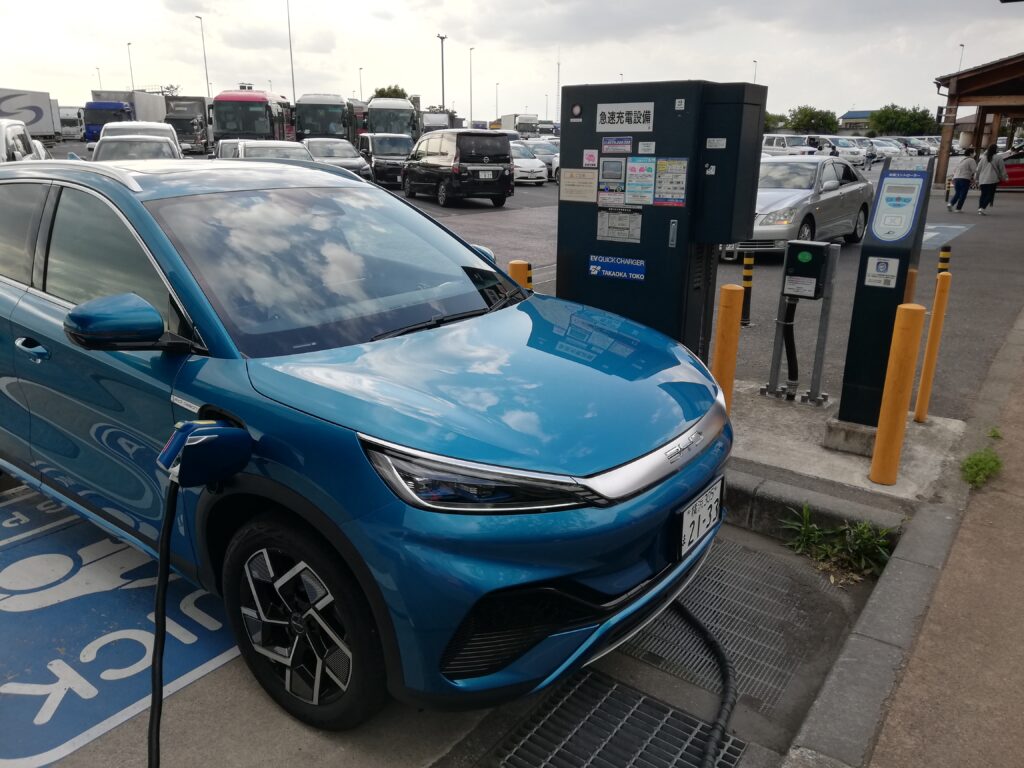
In the last few years, however, more chargers no longer require an eMP-compatible card. Independent networks such as ENEOS, EneChange, and Plago have been expanding. Premium Charging Alliance offers ultrafast chargers with astounding 150kW capacity. Although they offer subscription plans, you can also use their chargers without subscribing. Typically, you install an app, register your credit card, and then pay per use with no monthly fee. eMP has now adopted a similar scheme. I haven’t tried it yet, but apparently you scan a QR code on the charger, enter your credit card details each time—which sounds rather clumsy—and then the charger operates at a steep rate of 77 JPY per minute for outputs of 50 kW and above.
AEON malls used to offer very affordable charging without a membership fee (though you needed a WAON IC card, which you could also use for shopping in the mall). Now they are part of the ENEOS network, and the fees are the same as other ENEOS chargers.
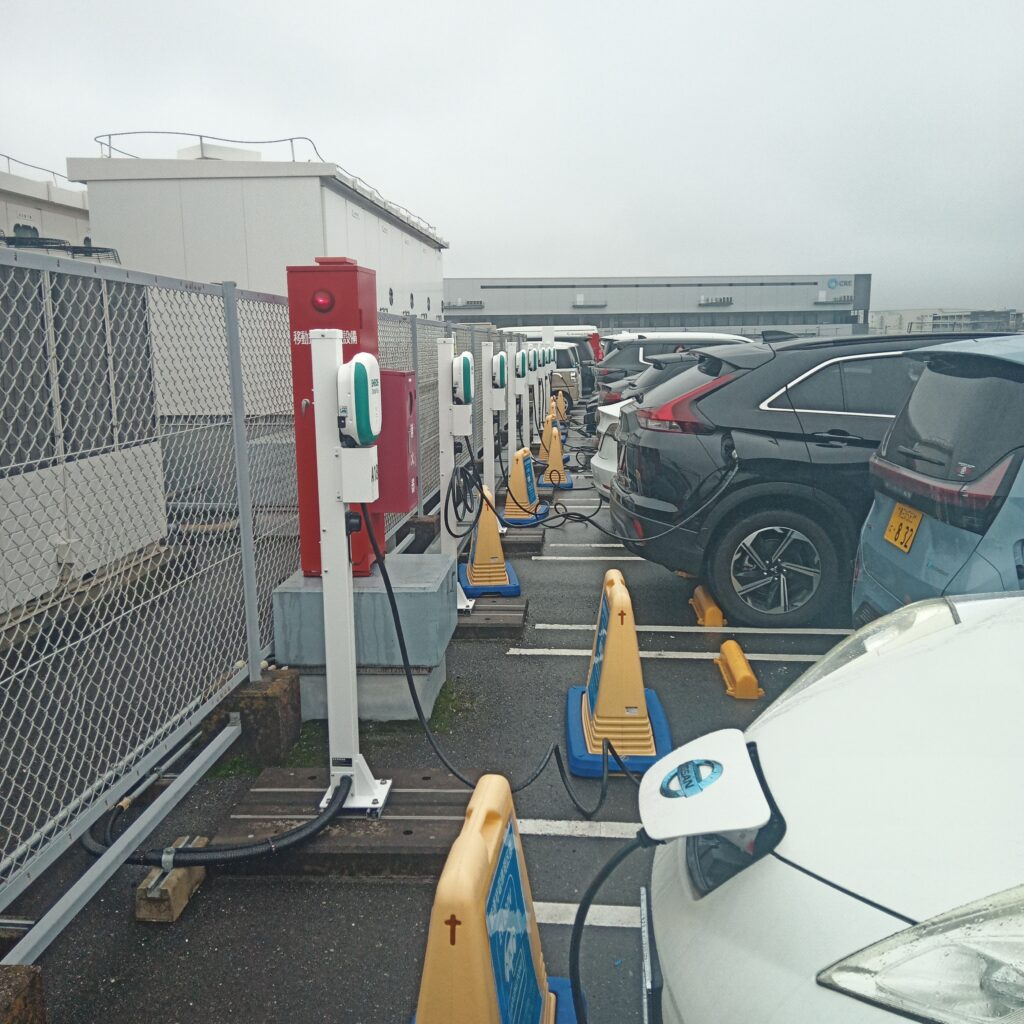
One nice thing about charging at AEON malls is that you can usually find a parking space even when the mall is very crowded on weekends. I sometimes charge at AEON malls simply because their charging spots are more likely to be available.
2026/01/16 4:26 PM - Tweet Facebook