
Hiroshi Kume and the Lasting Legacy of News Station
Mr. Hiroshi Kume, the longtime anchor of News Station, has passed away. He was widely known not only for his work on News Station, broadcast on Channel 10 (TV Asahi) in Tokyo, but also for serving as the MC of the hugely popular music program the Best Ten on Channel 6 (TBS) during the 1980s.
News Station became a groundbreaking presence in Japanese television news programmings in the late 1980s and 1990s. Before its debut, most people in Japan watched news almost exclusively on NHK, the nationally funded broadcaster. Private stations aired news as well, but were generally regarded as sources of entertainment–music, dramas, and comedy–rather than serious stories.
That changed in 1985 when TV Asahi launched News Station, airing at 10 PM on weekdays. The program effectively introduced the role of the “anchorperson” to Japan. At the time, NHK’s news format felt rather “stale”: official announcers read scripted stories in a calm and emotionless manner. In contrast, News Station featured Mr. Kume as a central figure who reacted to stories with surprise, disappointment, and even anger. He occasionally offered criticism of government policies and sparked public debate in ways uncommon on Japanese television then.
It is difficult to say precisely how much the program reshaped Japanese politics and society, but its rise coincided with a decade of major transitions: the bubble economy and its collapse, growing environmental concerns, and the temporary breakdown of the LDP-dominated “1955 system.” The show’s popularity, and its unconventional approach to news, certainly seemed to amplify public awareness of these changes.
The influence of News Station has in fact been a topic of serious scholarly interest in Japan studies. When I was a graduate student in the US in the late 1990s and early 2000s, I encountered multiple academic analyses comparing NHK and News Station, including articles that treated the show as an important subject in media and political studies.
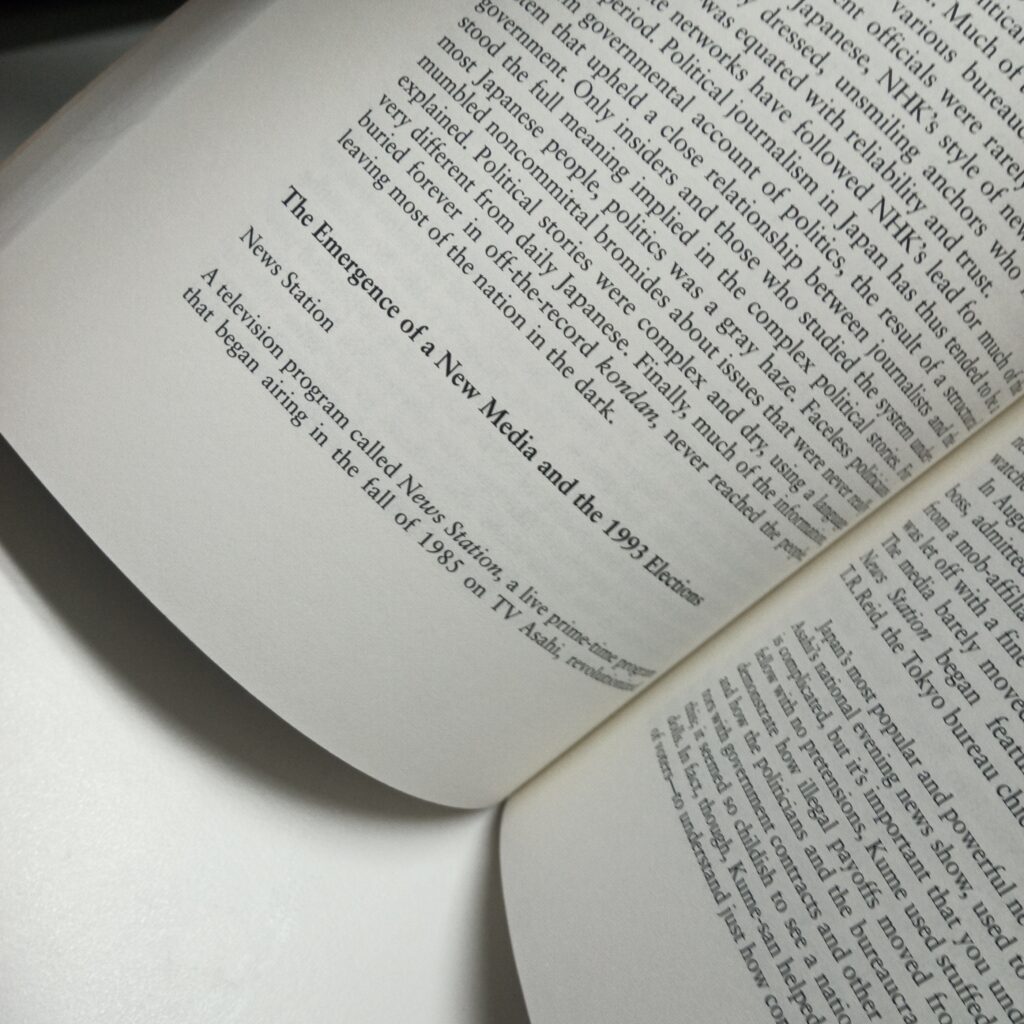
Because my own research focuses on environmental disputes, I paid particular attention to how News Station appeared to shape public sentiment. In the 1990s, opposition to dam construction, for example, reached its peak, and the program’s critical coverage of such projects was often cited as one contributing factor.
By the late 1990s, however, its influence had begun to wane. Other TV stations including NHK started adopting similar formats, and in 2004 News Station ended its run. Mr. Kume stepped down, and the program effectively was succeeded by Hodo Station, which maintained a similar style but with a different anchorperson.
After returning to Japan in 2007, I found myself rarely watching the 10 PM news anymore. This was not just a personal shift; more and more people were moving away from television altogether as the internet became the dominant platform for accessing news.
Looking back, News Station had a significant impact on public discourse in the 1990s. Today, however, it is hard to imagine a single TV news program playing such a role again. Television no longer holds the same power over public attention, especially when it comes to news.
2026/01/14 3:04 PM - Tweet Facebook